Extension 10: CPU and GPU
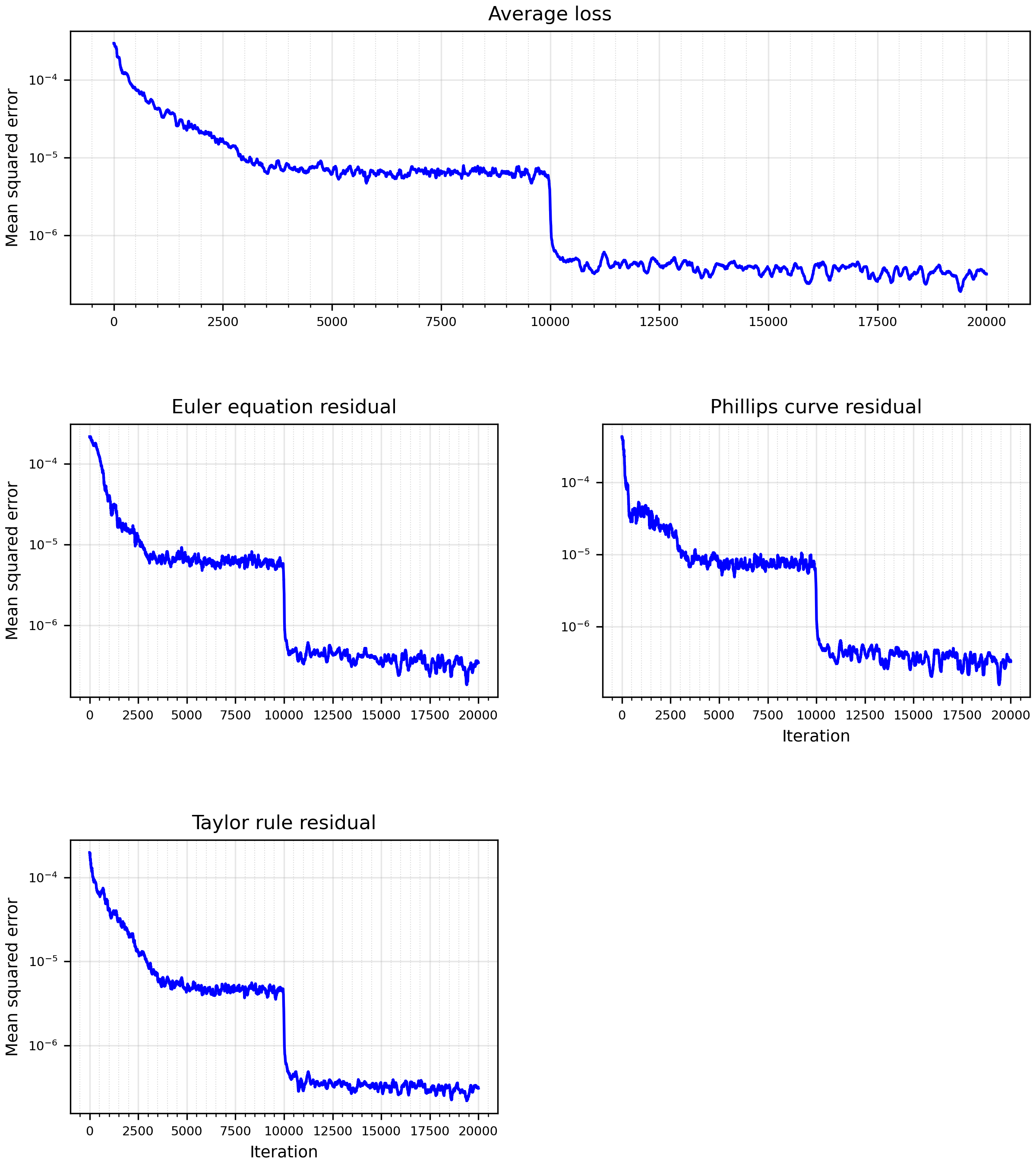
We now train the policy network on a GPU. The economic equations and training settings are unchanged.
Model
The model, observation equation, and filtering settings are those of Extension 9. The earlier examples run on a CPU, because we want the initial code to be as widely accessible as possible. However, to solve more challenging problems, it is necessary to have access to a decent GPU. We now adapt our code to work with GPUs, which are very commonly used in deep learning. The solution file for this extension stops with an error if no GPU is available.
PyTorch names each kind of GPU by its backend. NVIDIA GPUs use CUDA, and AMD GPUs appear under the same name with the ROCm build of PyTorch. Apple GPUs use MPS, through the Metal framework, and Intel GPUs use XPU.
A GPU pays off when each step works on large arrays. Our policy network is small, and the particle filter moves one period at a time through many small steps. The overhead of sending each step to the GPU then dominates. On a MacBook with an M1 Pro, training the policy network took 9 minutes on MPS and 2.5 minutes on the CPU. Generating the likelihood targets took 22 minutes on the CPU and had not finished after 80 minutes on MPS. We therefore train only the policy network on the GPU and keep the likelihood steps on the CPU. MPS is still useful for testing GPU code on a Mac.
Neural network solution
Formulation
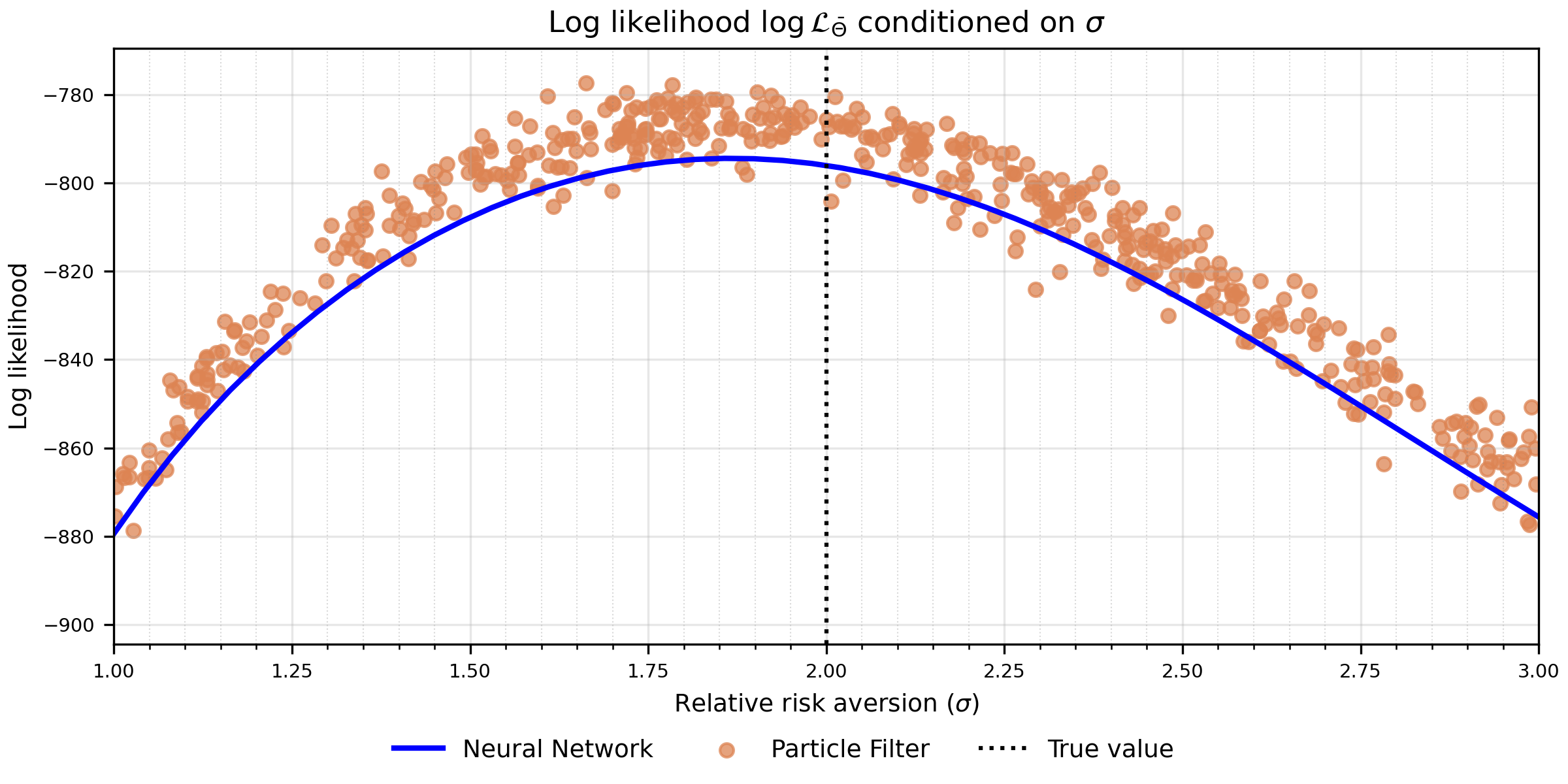
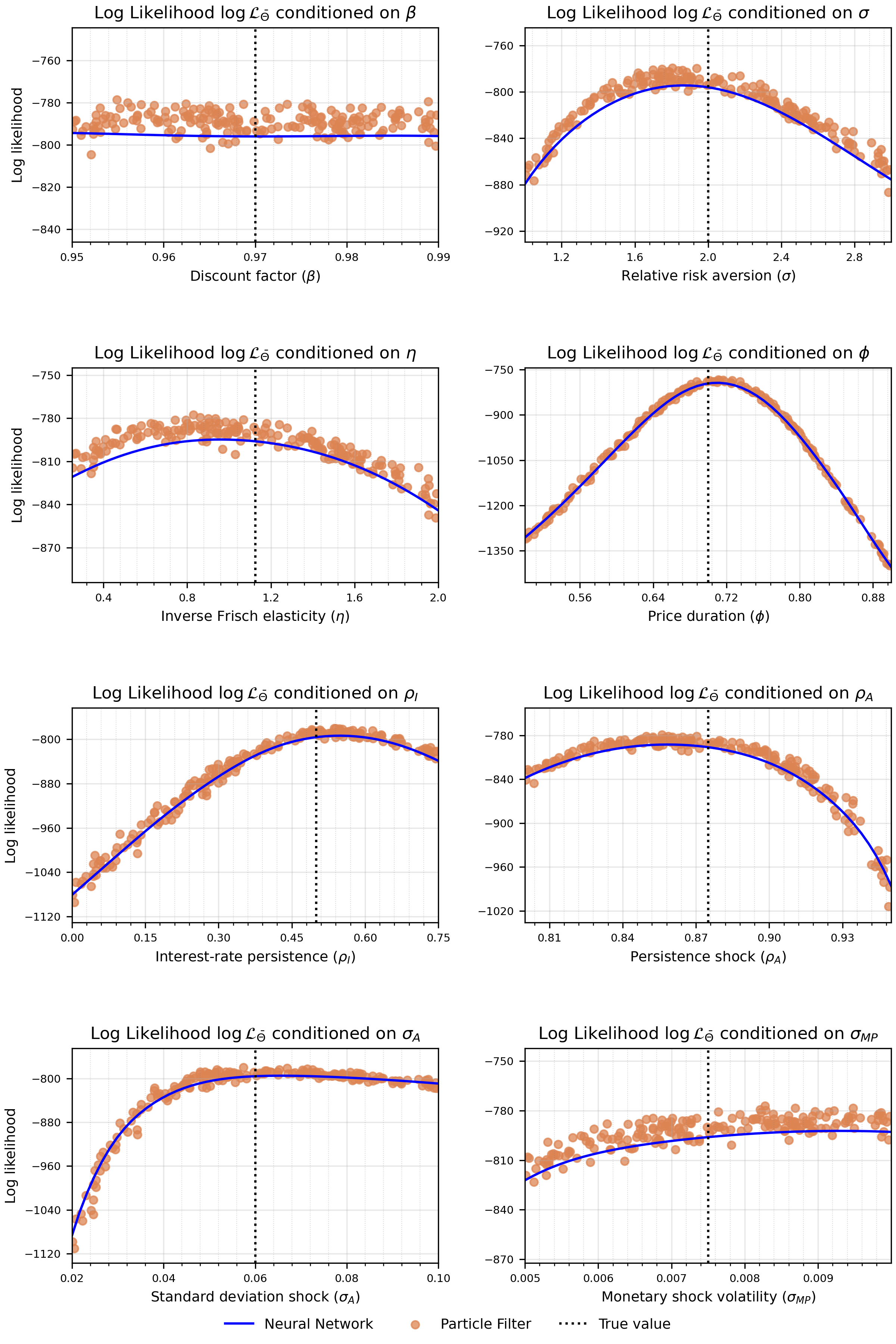
The policy and likelihood objectives are unchanged. Only policy training moves to the GPU. The particle filter, the likelihood targets, and the likelihood network stay on the CPU. The device does not change the number of equations, Monte Carlo draws, or observations. Random draws and floating-point arithmetic may produce different numerical paths across devices.
In the code
Find the GPU
torch.accelerator returns the GPU that PyTorch finds, whatever its kind, so the same code runs on NVIDIA, AMD, Apple, and Intel GPUs. The script stops with an error if there is none. Set USE_GPU = False to run on the CPU.
examples/rank/rank_extension_10.py
load_model = True
load_pf_dataset = True
load_pf_network = True
USE_GPU = True  # Set to False to run on the CPU.

# New in Extension 10: use the GPU that PyTorch finds, and stop with an error if there is none.
if USE_GPU:
    if not torch.accelerator.is_available():
        raise RuntimeError("No GPU found. Set USE_GPU = False to run on the CPU.")
    DEVICE = torch.accelerator.current_accelerator().type
else:
    DEVICE = "cpu"
print(f"Running on {DEVICE}.")

# New in Extension 10: the particle filter and the likelihood network are small, so they
# run faster on the CPU than on a GPU. Only policy training uses DEVICE.
PF_DEVICE = "cpu"

torch.set_num_threads(4)
set_rc_params()

# Outputs are stored next to this notebook.
folder = Path("outputs") / "extension_10"
figures = folder / "figures"
figures.mkdir(parents=True, exist_ok=True)Pass the device to each stage
DEVICE is passed to policy training. PF_DEVICE keeps likelihood-target generation, surrogate training, and the filter comparison on the CPU. Plotting uses CPU arrays, and saved weights can be loaded on the CPU. Simulating the observations stays on the CPU. Saved results are reused as in the other examples.
examples/rank/rank_extension_10.py
model = NKModelExt10(PARAMETERS, RANGES, SHOCKS)
model_path = folder / "model.pt"
train_model = not load_model or not model_path.exists()

training_config = TrainingConfig(
    iteration=20000,
    inner_steps=2,
    steps=5,
    batch=100,
    mc=10,
    par_draw_after=10,
    lr=1e-3,
    device=DEVICE,
    seed=1234,
    weights=ConstantWeights([1000.0, 1000.0, 1000.0]),
    detach_next=True,
)

if train_model:
    print("Training the policy network...")
    model.train_model(training_config)
    # A new policy needs new observations, so delete the saved ones.
    (folder / "observations.pt").unlink(missing_ok=True)
    model.save(model_path)
else:
    print("Loading the saved policy network.")
model.load(model_path)examples/rank/rank_extension_10.py
surrogate_path = folder / "surrogate.pt"
train_pf_network = not load_pf_network or not load_pf_dataset or make_data or not surrogate_path.exists()
make_pf_dataset = train_pf_network and (not load_pf_dataset or make_data or not pf_dataset_path.exists())

if make_pf_dataset:
    print("Generating likelihood targets...")
    pf.generate_likelihood_dataset(
        N=7500, P=250, sim=125, burn=100, sobol=True, device=PF_DEVICE, seed=12345,
    )
    pf_dataset_path.parent.mkdir(parents=True, exist_ok=True)
    torch.save(pf.dataset, pf_dataset_path)
elif train_pf_network:
    print("Loading the saved likelihood targets.")
pf.dataset = torch.load(pf_dataset_path, weights_only=True)examples/rank/rank_extension_10.py
if train_pf_network:
    (folder / "likelihood_sigma.pt").unlink(missing_ok=True)
    (folder / "likelihood_all.pt").unlink(missing_ok=True)
    print("Training the likelihood network...")
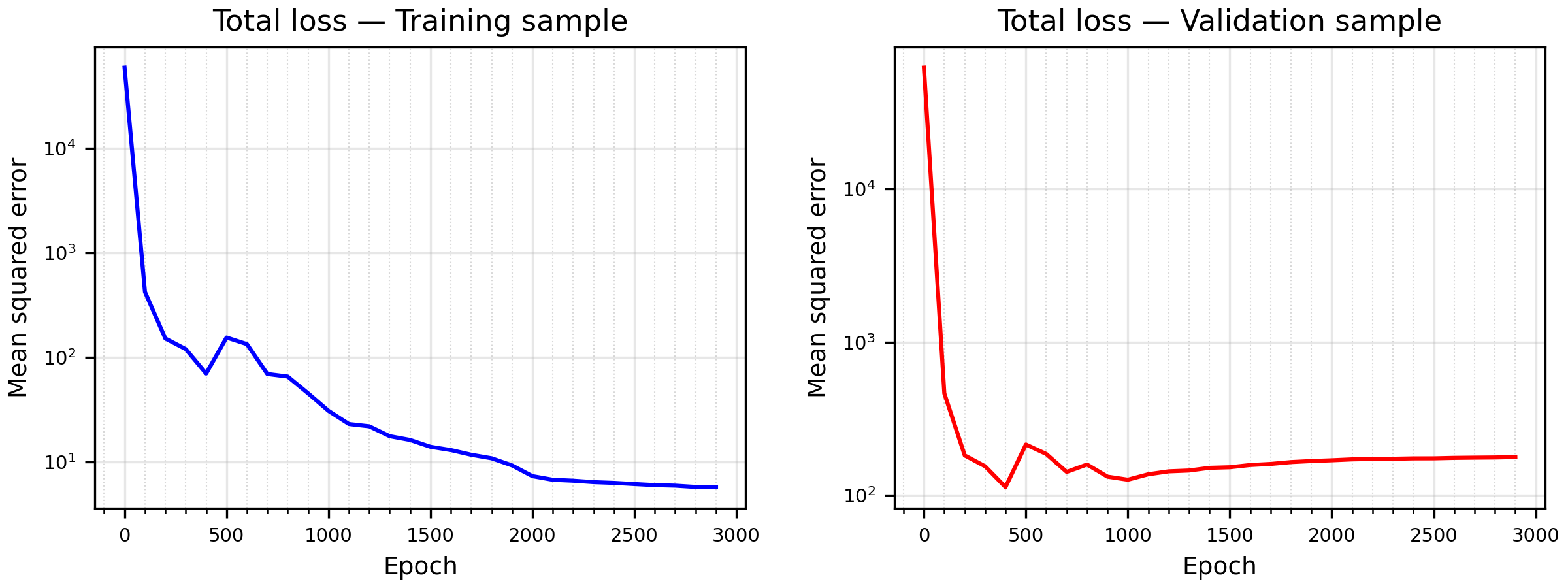
    pf.make_surrogate_network(hidden=256, layers=5, activation="Mish", seed=1234)
    pf.train(
        batch=200, epochs=3000, lr=1e-3,
        validation_share=0.25, print_after=100, device=PF_DEVICE, seed=1234,
        optimizer_name="Adam", scheduler_name="step", step_size=1000, gamma=0.1,
    )
    pf.dataset = None  # Targets are stored separately in pf_dataset_path.
    pf.save(folder, name="surrogate")
else:
    print("Loading the saved likelihood network.")
pf.load(surrogate_path)Results
Solution
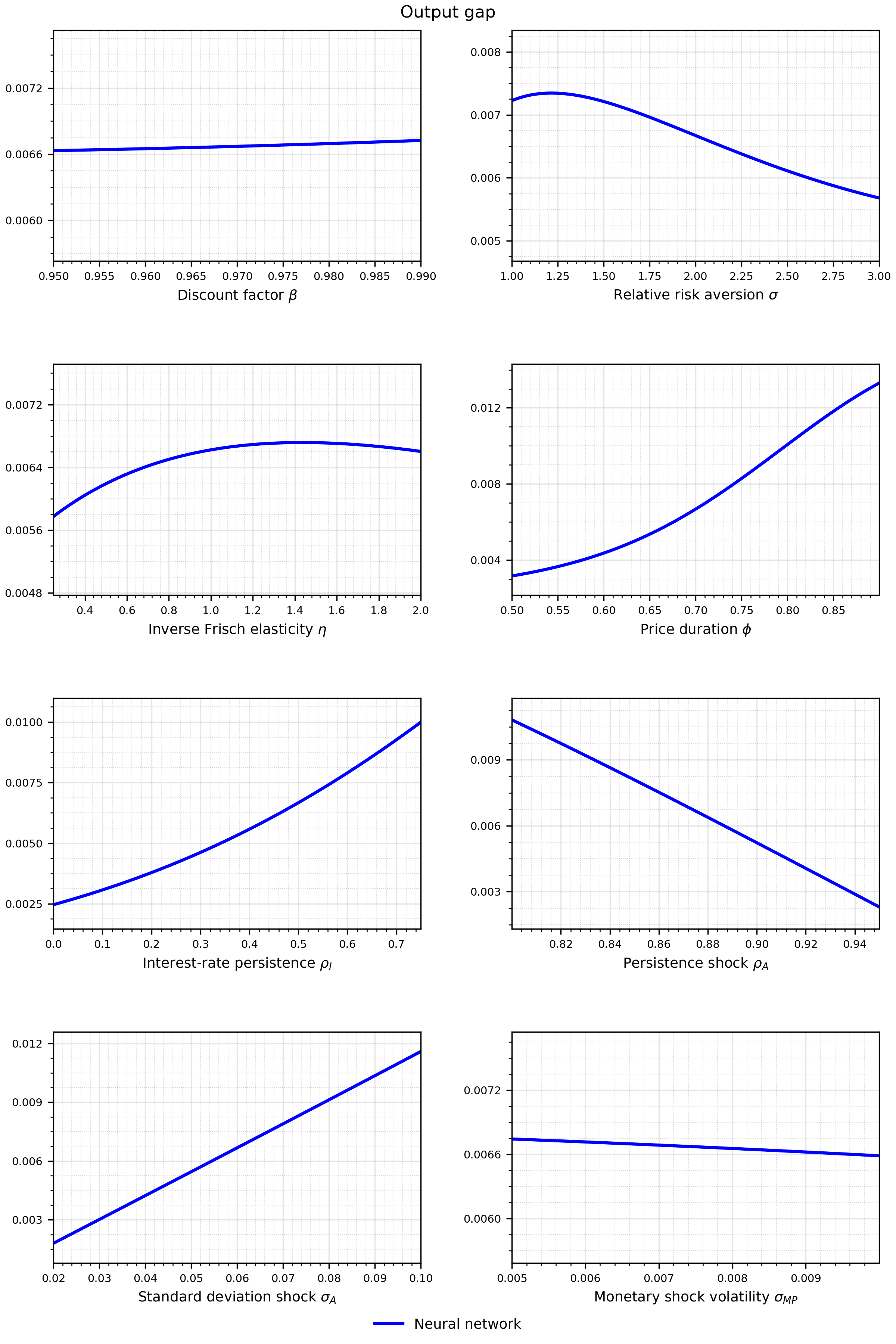
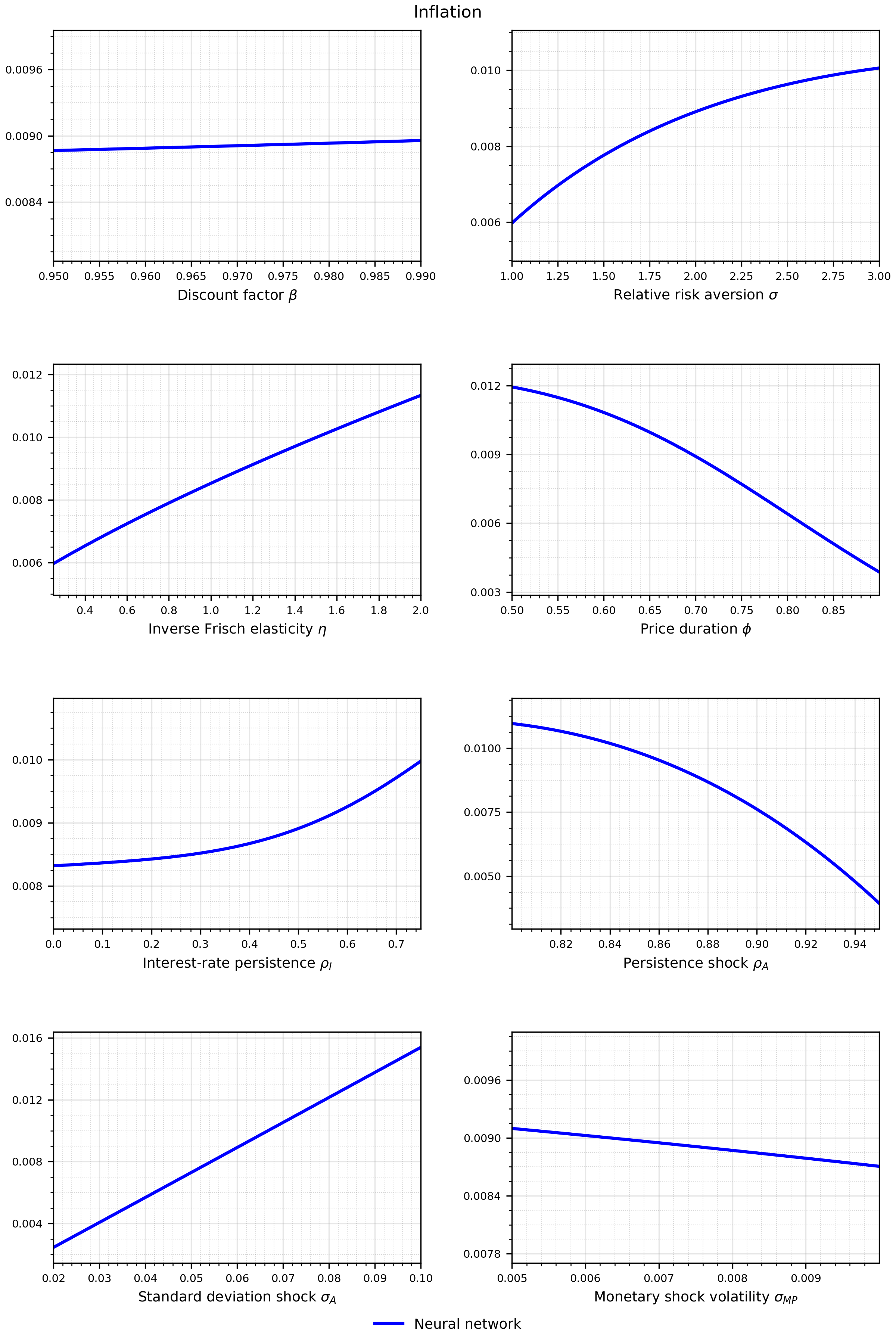
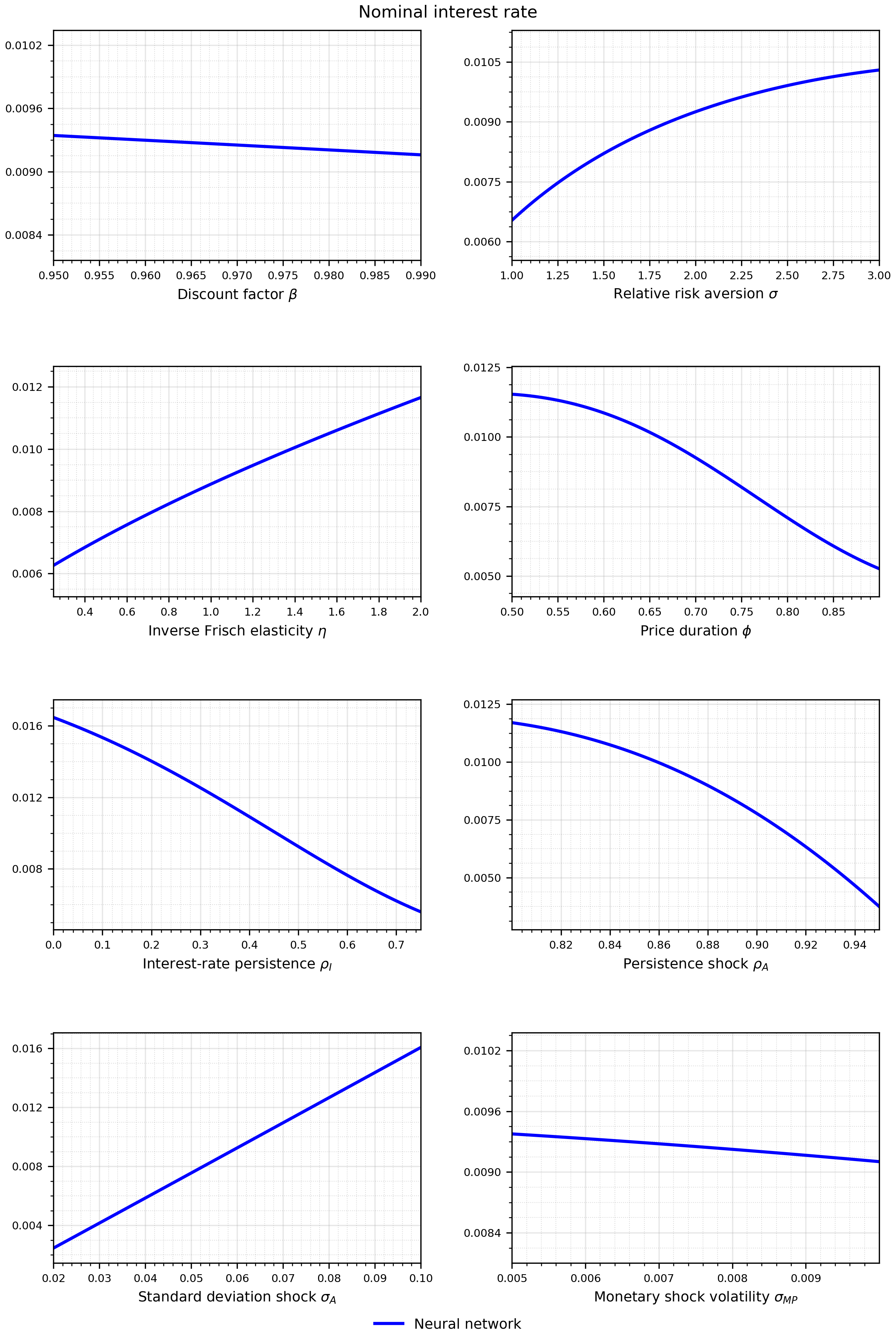
Likelihood